
The Other Path · Education & stories
Find Your Format: How Herbs & Cannabinoids Reach the Body

NOTES FROM THE HERBARIUM · RESEARCH GUIDE
A cup of kava, a dropper of CBD, a botanical balm: each begins a different journey. The ingredient matters, but so do the preparation, the dose, and the doorway it takes into the body. Here is a map through the apothecary, with room for both curiosity and scientific uncertainty.
The journey: skin, mouth, lungs, gut, and the liver
Absorption is entry into the body; bioavailability is the fraction of a dose reaching systemic circulation unchanged. Neither tells us, by itself, whether a product improves a symptom. A blood-level peak is not necessarily the moment a benefit begins or ends. [1]
When a compound is swallowed, it generally travels through the digestive tract, is absorbed through the gut, and reaches the liver through portal blood before entering general circulation. This first-pass metabolism can reduce the original compound and create metabolites. Inhaled compounds can move from the lungs into circulating blood more directly. Properly formulated mouth-delivery and transdermal products can also avoid some initial first-pass processing. Avoiding first pass does not mean avoiding the liver forever: circulating compounds can still be metabolized there later. [2]
There is no dependable “10 mg by any route feels the same” conversion. Food, formulation, medications, repeated use and the individual can change exposure. A systematic review of 39 CBD studies found substantial differences across routes and preparations, with uneven study quality. [3]
| Route | Typical pathway | Timing & uncertainty |
|---|---|---|
| Inhaled smoke or aerosol | Lungs → blood | Often rapid uptake; device and inhalation pattern matter. Respiratory risks remain. |
| Swallowed food, capsules, drinks, tea | Gut → portal blood → liver → systemic circulation | Often slower and more variable; meals and formulation can change exposure. |
| Buccal / sublingual | Mouth lining plus a swallowed portion | Not automatically faster than swallowing; product-specific evidence matters. |
| Topical cream, balm, body oil | Skin and nearby tissues; systemic uptake varies | Local intent does not guarantee zero blood absorption or a proven benefit. |
| Validated transdermal delivery | Across skin → blood | Usually designed for sustained delivery; an adhesive patch alone proves nothing. |
| Bath products / infused tape | Skin contact; delivered dose often unestablished | No reliable universal onset, duration or absorbed-milligram claim. |
A little inner forest: the endocannabinoid system
Your body makes its own signaling molecules, including anandamide (AEA) and 2-arachidonoylglycerol (2-AG). Together with receptors such as CB1 and CB2 and enzymes that build and break down these signals (including FAAH and MAGL), they form the endocannabinoid system, or ECS. It participates in pain signaling, appetite, stress responses, immune activity and other functions. CB1 is abundant in the nervous system, but neither receptor belongs exclusively to one organ system. [4]
Plant cannabinoids are not interchangeable keys. THC activates cannabinoid receptors differently from CBD; CBD has relatively low affinity for CB1/CB2 and several proposed actions beyond them. Research on CBD cannot simply be assigned to CBG, CBN, CBC, CBDA or THCV. Having an ECS does not prove that everyone needs a cannabinoid supplement, or that a product “balances hormones.” Kava, kanna and the broad category called adaptogens should not all be described as cannabinoids. [5]
Find your format: twelve paths through the apothecary
1. Smoking: a fast path with combustion exposure
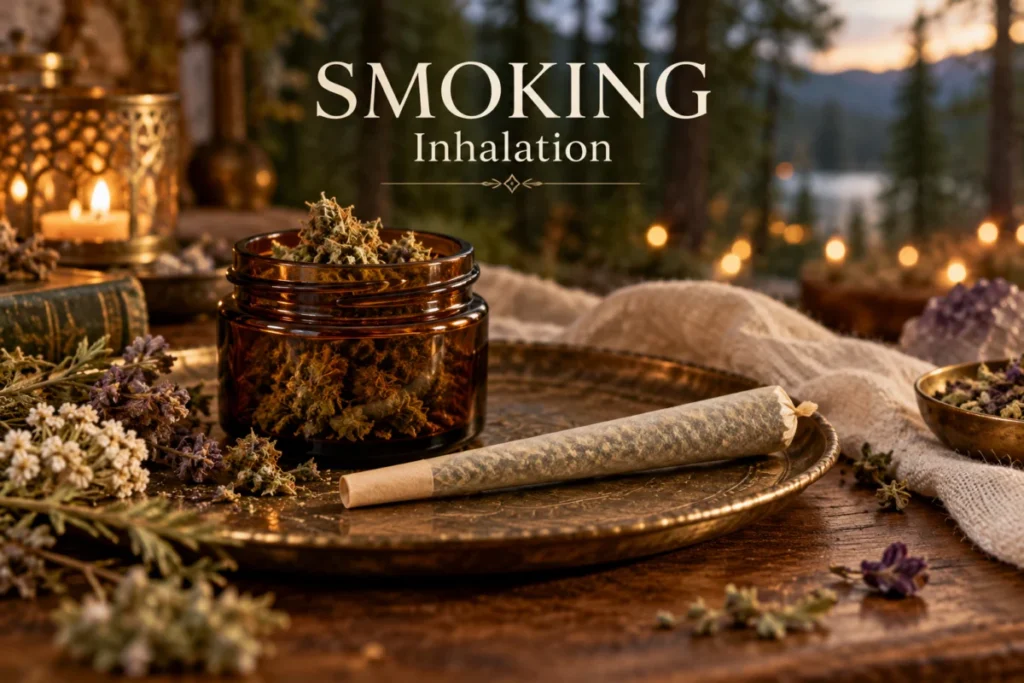
Smoke carries compounds into the lungs, where some enter blood across the air sacs. Inhaled cannabinoids can reach circulation quickly and avoid initial gut/liver first pass. Burning plant material also generates combustion products; “herbal” does not make smoke harmless. Controlled cannabis research found greater expired carbon monoxide after smoking than after vaporization. This does not establish that smoking mullein, lavender or another herb treats lung disease. [1] [6]
California context: inhalation is discussed for education, not as an offer of hemp flower or pre-rolls. California restricts hemp inhalable products; check the state’s current industrial-hemp guidance. A hemp product and a product sold through the licensed cannabis system are not interchangeable legal categories.
2. Vaping: aerosol is different from smoke
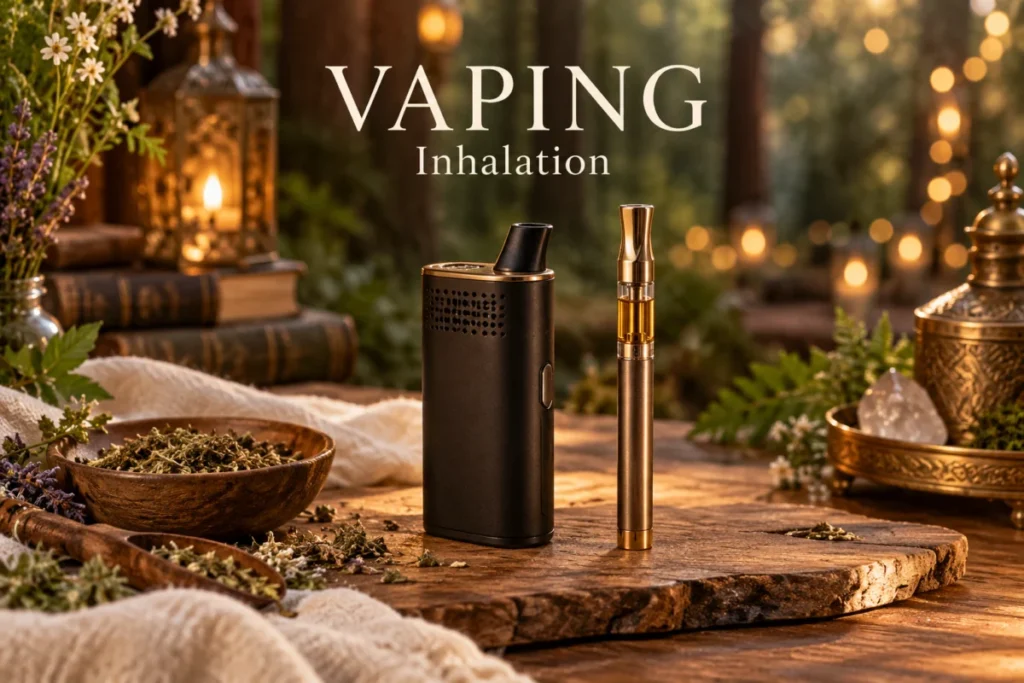
Dry-herb vaporizers heat plant material; liquid-cartridge devices create an aerosol from a formulation. They are different technologies. Avoiding combustion can reduce some smoke exposures, but does not make aerosol risk-free. In a small crossover trial of THC-containing cannabis, vaporization produced stronger exposure and effects than smoking the same nominal THC amount. That result is not a CBD-cartridge dosing rule. [7]
Care note: never put oral tinctures, carrier oils, massage oils or essential oils into a vape. A liquid safe for one route is not automatically safe for another. Lung disease, pregnancy and sensitivity to aerosols are reasons to seek clinical guidance rather than assume this is a gentler option.
3. Edibles: the digestive path
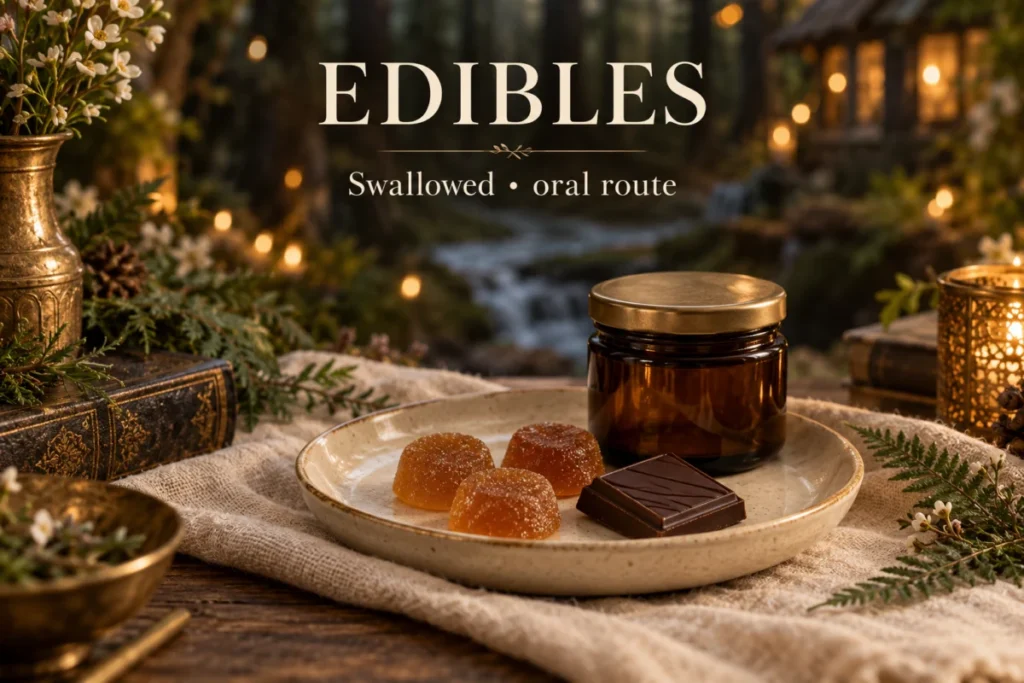
Gummies and other swallowed foods generally follow the gut-and-liver pathway. Absorption can be delayed and variable, so an early lack of sensation does not prove nothing was absorbed. With THC, first-pass metabolism creates the active metabolite 11-hydroxy-THC; that mechanism helps explain why oral THC differs from inhaled THC. It does not mean CBD turns into THC in your liver. [2]
Food can matter greatly for CBD. One pharmaceutical-CBD trial found several-fold higher exposure with a high-fat meal. That is a formulation-specific finding, not advice to increase a product’s strength by changing meals. Follow its directions and discuss consistent administration with a clinician when medical use or interacting medications are involved. [8]
4. Capsules & powders: convenient does not mean equivalent
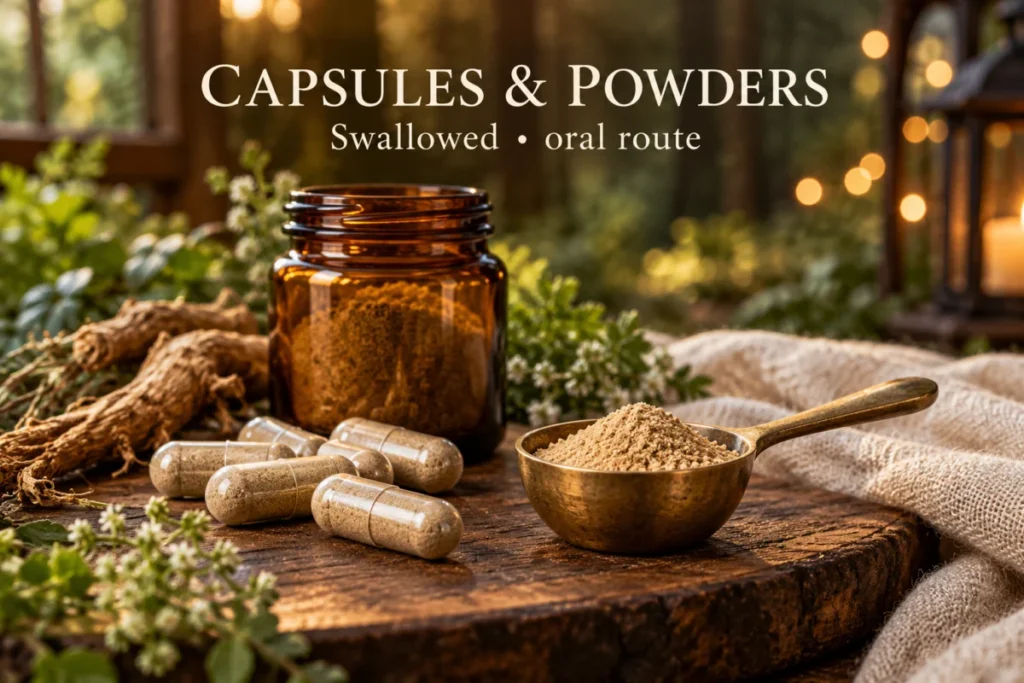
Swallowed capsules, softgels and powders are oral delivery. A capsule must release its contents; a whole-root powder and a standardized extract can contain very different amounts of active constituents. Milligrams of herb are not milligrams of kavalactones, CBD or kanna alkaloids. Capsules offer a defined serving, but not guaranteed absorption. [9] [10]
Clinical results belong to the tested extract and regimen. For example, a placebo-controlled study of a particular ashwagandha root extract reported improvements in perimenopausal symptoms over eight weeks. It did not compare tea, capsules and tinctures, or establish a universal dose for women. [11]
5. Tinctures: under the tongue is not the whole story
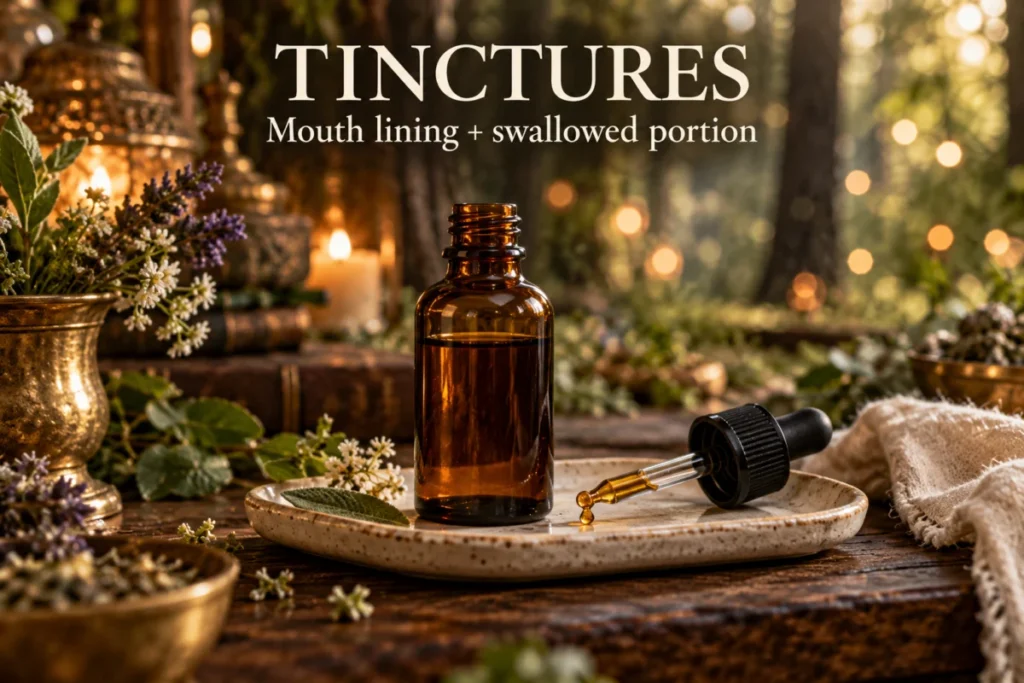
Sublingual means under the tongue; buccal means through the cheek lining. A liquid held in the mouth may have a mucosal component, but some is swallowed. The carrier, formulation and contact conditions matter. “Tincture” names a preparation, not proof that its entire dose bypasses the liver. Herbal tinctures may use alcohol or glycerin; products marketed as CBD tinctures are often oils.
In one small study of eight healthy men, CBD oil used as sublingual drops and the same oil swallowed in gelatin capsules produced similar pharmacokinetic profiles. That does not settle every product, but it challenges a blanket claim that all drops act faster. For kanna, a frequently cited mouth-absorption experiment used pig tissue outside the body, not human participants; it cannot establish a human onset time. [12] [13]
6. Elixirs & drinks: a name, not a new organ pathway
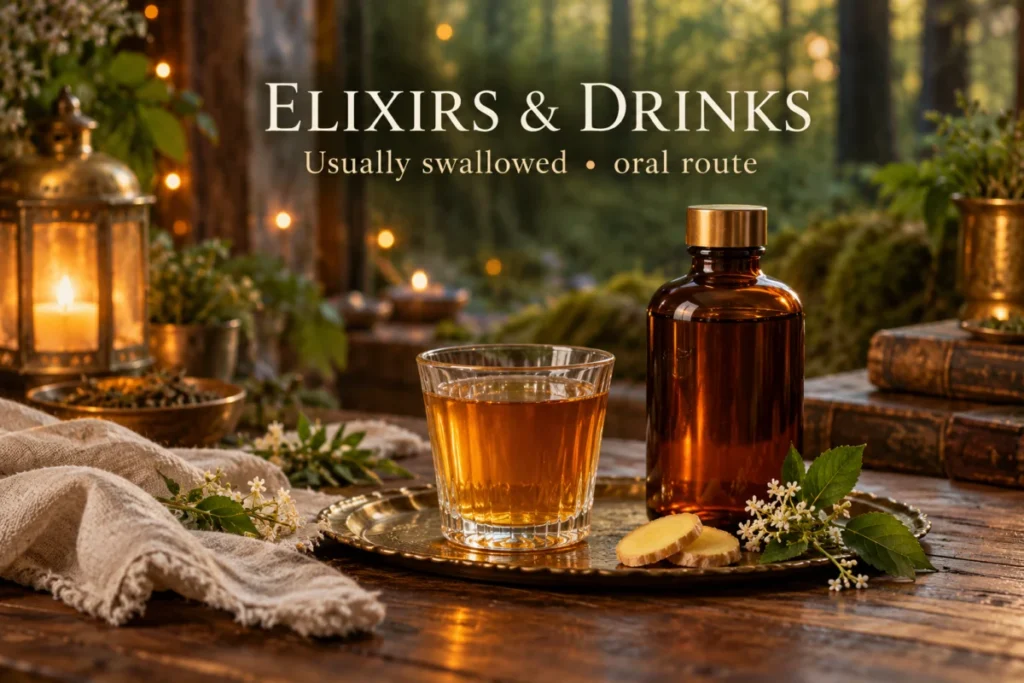
Most botanical shots, elixirs and drinks are swallowed. A drink does not automatically bypass digestion because it is liquid. Emulsions and other formulations can change cannabinoid absorption, but “nano” or “water-soluble” on a label does not establish a clinically superior effect or a universal conversion from oil-based products. Look for human data on the actual formulation. [3]
Check the complete ingredient list: caffeine, alcohol, sweeteners and multiple botanicals can alter the experience and risks. A blend containing kanna, kava and cannabinoids cannot be understood by reading only its CBD number.
7. Teas, infusions & traditional kava
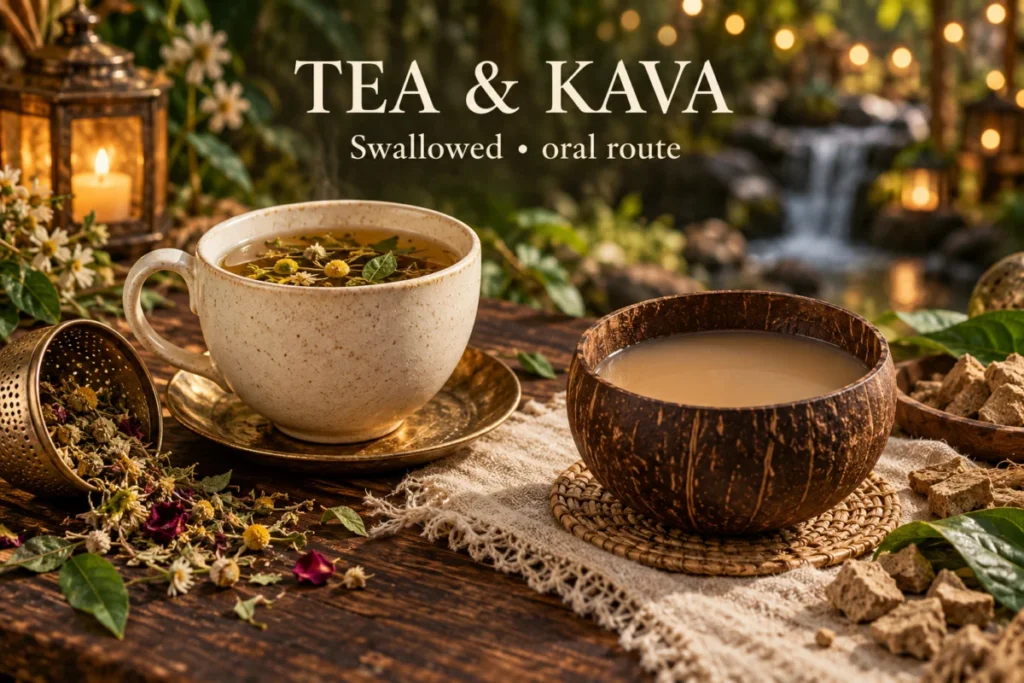
A tea is swallowed, but extraction determines what enters the cup. A water infusion, a root preparation and a concentrated extract are not chemically identical. CBD is poorly water-soluble, so plain hemp tea cannot be assumed to deliver the same amount as a formulated CBD oil. [1]
Kava has a long Pacific history of aqueous preparation. A human study of a specific standardized kava capsule found kavalactone blood peaks around one to three hours, with food reducing absorption in that study. That is not a timing promise for a traditional bowl or a recommendation to take kava fasting. Notice how different this food effect is from the CBD finding above. [9]
Explore individual plant preparations and cautions in our Herbarium, including marshmallow, mullein, damiana and calendula. Evidence about one plant or extract should not be transferred to another cup.
8. Creams & balms: topical is not the same as transdermal
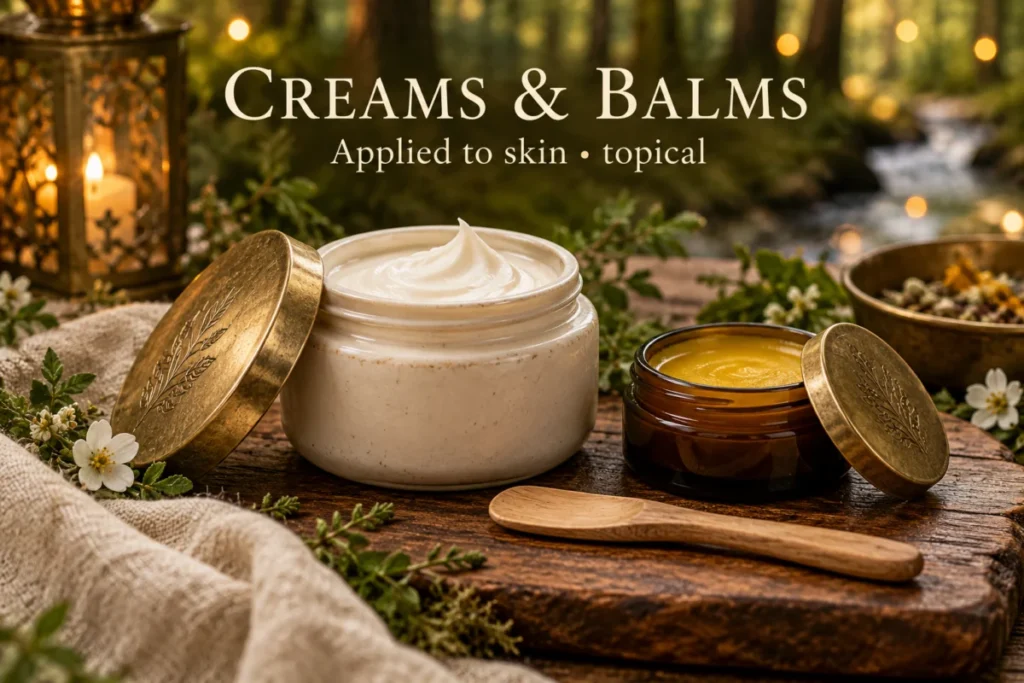
A topical is usually intended for skin or nearby tissues. A transdermal formulation is designed to carry a compound across skin into systemic blood. The skin’s outer layer, the stratum corneum, is a major barrier. A cream’s ingredients and delivery system affect how much gets through.
A controlled study of five commercial CBD skin products found measurable transdermal CBD absorption with three formulations, without discernible pharmacodynamic effects. Conversely, a placebo-controlled pilot of one CBD cream did not show improved post-exercise soreness or performance. These results argue against both “all topicals stay completely outside the blood” and “all CBD creams work.” [14] [15]
The blood–brain barrier is a different barrier. It separates circulating blood from brain tissue. A product being called “topical” does not prove its ingredients can never reach the brain; systemic exposure and molecular properties determine that question. [16]
9. Body & massage oils: read the route on the label

A massage oil is a skin product, not an edible or vape oil. An oral CBD oil, a hemp-seed culinary oil and a concentrated essential oil are also different preparations. The word “oil” alone tells us neither cannabinoid content nor the appropriate route.
Skin absorption depends on the full formula; a soothing massage experience does not establish how much CBD reached circulation or which ingredient produced an effect. Consider fragrances and essential oils when checking for irritation or allergy, and follow the label’s external-use directions. Human topical-CBD findings cannot be generalized to every body oil. [14]
10. Bath bombs & soaks: a ritual with a dose question

These products disperse into bathwater and contact skin. The milligrams printed on a bath bomb are not the milligrams absorbed by the person bathing. In the literature reviewed for this guide, we did not identify robust human pharmacokinetic trials establishing a reproducible systemic CBD dose from ordinary CBD bath bombs.
A pleasant warm bath, fragrance or relaxing ritual is not proof of cannabinoid delivery. Avoid claims that a bath bomb works like an edible or a validated patch. Oils can make a tub slippery; fragrances may irritate skin or genital tissues. Use only as directed, do not ingest, and do not use an ordinary bath product as an internal or vaginal preparation.
11. Transdermal patches: ask what was actually delivered

A genuine transdermal system must release its ingredient and move it across skin. In an exploratory human study, a particular CBD/THC transdermal system produced measurable blood levels. It was a small, open-label, formulation-specific study, not proof that every cannabinoid patch does the same. [17]
Ask for human absorption data and distinguish amount contained, amount released and amount absorbed. A patch avoids initial gut/liver first pass only for the portion delivered through skin; liver metabolism and drug interactions can still occur. Follow product-specific directions about placement, wear time and heat. Do not cut a patch or add external heat unless its instructions explicitly allow it; avoid damaged skin and watch for adhesive reactions.
12. CannaTape & cannabinoid-infused tape: two claims to examine
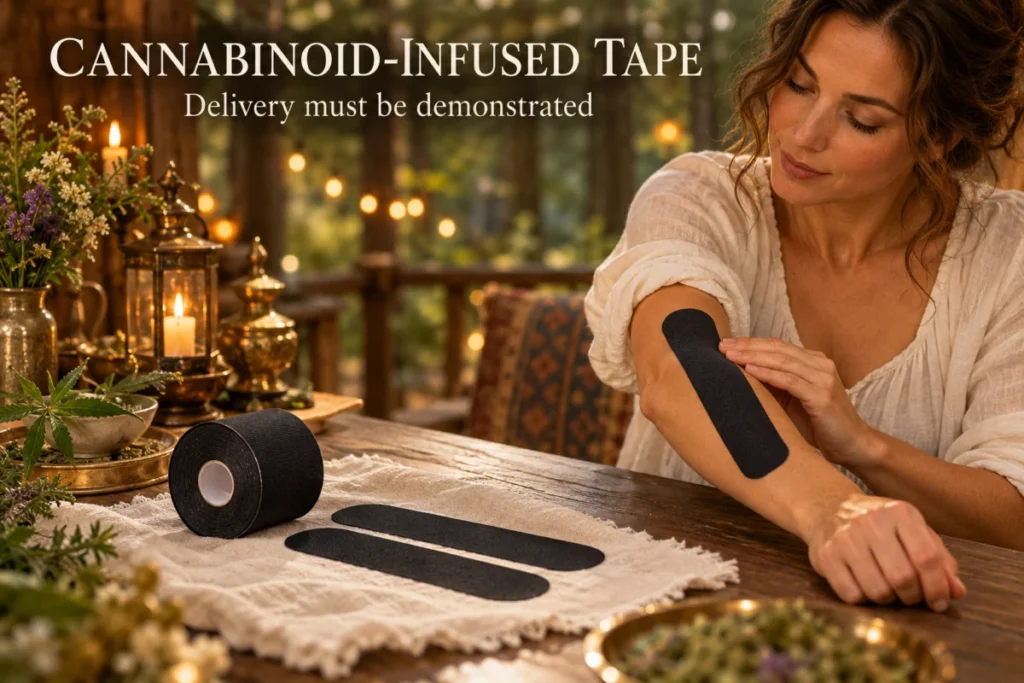
Infused kinesiology tape combines a physical tape with added ingredients. Mechanical support or a cooling sensation does not establish systemic cannabinoid delivery. Evidence about ordinary kinesiology tape cannot prove a CBD ingredient crosses skin, and evidence for one transdermal patch cannot validate another tape.
We did not identify independent, peer-reviewed human absorption research establishing a delivered cannabinoid dose for CannaTape in this review. Until product-specific evidence is available, describe it as infused tape rather than assume it behaves like a proven transdermal medicine. Check adhesives, menthol and other added botanicals for irritation.
Different plants, different chemistry
Kava: kavalactones are the main studied constituents, and human oral-extract pharmacokinetics cannot be assigned to every beverage. Avoid combining kava with alcohol or other sedating substances. Liver injury has been reported, including with different extraction types; liver disease and liver-affecting medicines require clinical review. Traditional preparation does not guarantee zero risk. [18]
Kanna: mesembrine-type alkaloids and standardized extracts have been investigated for serotonin-related and phosphodiesterase effects. Small oral-extract trials exist, but they do not validate every tea, snuff or sublingual product. Do not combine kanna with antidepressants or other serotonergic drugs without professional review; direct interaction trials are limited, so this is a precaution rather than a quantified risk estimate. [10] [19]
Adaptogens and nootropics: these are broad labels, not one compound or one route. Ashwagandha, Rhodiola and a mushroom extract have different constituents, evidence and cautions. Results from a named standardized extract do not establish the same effects for raw powder, tea or a multi-ingredient elixir.
What does the research say about women?
Some studies report differences between female and male participants, but results vary with formulation, route and study design. A scoping review found a sparse human evidence base for sex differences in CBD. A later small repeated-dose study found no significant overall sex effect on raw CBD pharmacokinetic measures, while some metabolite-to-parent changes over time differed. These findings do not establish a universal “women’s dose.” [20] [21]
For THC, pooled oral/vaporized studies found greater sensitivity on some subjective outcomes among women, including anxiety-related effects. This supports caution about extrapolating across people; it is not evidence that all women should use a fixed percentage less CBD, kava or kanna. [22]
Research often uses binary sex categories and does not adequately represent everyone’s physiology, hormonal contraception, hormone therapy, perimenopause or menopause. Where a study enrolled only men, as with the small drop-versus-capsule comparison, we have identified that limitation rather than present it as women-specific evidence.
Can the menstrual cycle tell us when to consume or avoid something?
There are promising clues, but no validated cycle calendar for these products. Menstruation begins the follicular phase; ovulation separates it from the luteal phase, whose later portion is often associated with premenstrual symptoms. Cycle length and symptom timing vary. A fixed “day 14” rule does not fit everyone.
Human research links circulating anandamide with changes in reproductive hormones across the cycle. That is evidence of biology, not evidence that adding CBD at a particular phase improves health. Endogenous anandamide, CBD and THC are different molecules; their effects cannot be substituted for each other. [23] [24]
| Ingredient & timing tested | Finding | What we cannot conclude |
|---|---|---|
| CBD softgels, starting when menstrual-related symptoms began | A 33-person open-label study tested 320 or 640 mg daily for five consecutive days per month over three months. Several symptom scores improved relative to baseline. [25] | No placebo group and no comparison of cycle phases or routes. Research doses were high; this is not a consumer dosing recommendation or proof that symptom onset is the optimal start date. Some authors had cannabinoid-industry affiliations. |
| Lavender scent, late luteal / premenstrual phase | A crossover study of 17 women compared a 10-minute lavender-aroma exposure with water control. Selected short-term mood and autonomic measures improved. [26] | It did not compare late luteal with other phases or establish lasting PMS treatment. Smelling lavender is different from smoking it, vaping essential oil, swallowing oil or taking a capsule. |
| Standardized Rhodiola extract, estimated premenstrual phase | A small placebo-controlled trial in 24 female taekwondo athletes tested 500 mg daily for 10 days and reported improvement in selected PMS symptoms and some performance-related measures. Published online October 15, 2026. [27] | Phase was estimated rather than hormonally confirmed. It did not compare phases; a small athlete study does not establish a general cycle-based regimen. |
| Oral THC, early versus late follicular phase | Despite differing estrogen levels, most responses were similar; a few subjective effects began slightly earlier in the early-follicular group. [28] | No reliable “high-estrogen days are unsafe” rule emerged. Other phases and hormone treatments remained unanswered. This was THC research, not a CBD or TOP-product recommendation. |
Where the trail is still unmarked: we did not identify convincing human phase-comparison trials that tell shoppers when to use or avoid kava, kanna, CBG, CBN, CBC, CBDA, THCV, mullein, damiana, marshmallow or calendula. Nor is there a validated cycle-based choice among a tincture, edible, cream, bath bomb, patch or infused tape. Lack of evidence is not proof of safety.
For someone already using a clinician-approved product, a diary of symptoms, cycle dates, preparation, food and unwanted effects may support a more useful conversation than an online “cycle syncing” dosing chart. Do not raise a dose just because an app predicts a phase. Severe pain, heavy bleeding, major mood changes or symptoms suggestive of PMDD deserve medical evaluation. Do not stop prescribed treatment to follow a botanical calendar.
Trying to conceive, pregnant or breastfeeding? Reproductive signaling involves the ECS, but available research does not define a safe fertility window for self-administered cannabinoids. Do not use this guide to identify “safe days.” Avoid non-prescribed cannabinoids during pregnancy or breastfeeding, and discuss botanicals and conception plans with a qualified clinician; changing the route does not establish safety. [29]
A thoughtful dose of care
- Check medications first. Cannabinoid interactions have been documented, particularly with some narrow-therapeutic-index medicines. Ask a pharmacist about your exact product and medicines, including antiseizure drugs, anticoagulants and transplant medicines. [30]
- Natural does not mean liver-neutral. A controlled trial in healthy adults found liver-enzyme elevations in some participants taking daily CBD. Those findings do not quantify the risk of every lower-dose product, but they make “CBD cannot affect the liver” an unsafe claim. [31]
- Do not stack unfamiliar preparations. Multiple sedating botanicals, alcohol and medicines can make unwanted effects harder to predict. Do not drive while impaired.
- Keep route and label together. Do not swallow external-use products, vape tinctures or use ordinary body products internally. A batch lab report supports identity and content, not proof of clinical effectiveness.
- Separate content from delivery. Milligrams in a bottle, bath bomb or patch are not automatically milligrams reaching blood. Even measured absorption does not prove a desired benefit.
- Personalize with qualified help. Health conditions, allergies, medications, pregnancy and hormonal treatments matter more than a one-size-fits-all route ranking. No universal women’s dose or cycle-based dose schedule is established here.
For plant-by-plant benefits, evidence limits and contraindications, continue into the Herbarium. Bring curiosity, and bring the complete label when asking your clinician or pharmacist for guidance.
Research library
Peer-reviewed human trials, reviews and clearly identified laboratory studies. References support specific statements above; inclusion is not a product endorsement. Titles are shortened where needed for readability. This is a focused educational review, not an exhaustive systematic search.
- Millar SA et al. A Systematic Review on the Pharmacokinetics of Cannabidiol in Humans. Front Pharmacol. 2018. DOI.
- Huestis MA. Human cannabinoid pharmacokinetics. Chem Biodivers. 2007. DOI.
- Moazen-Zadeh E et al. Pharmacokinetics of Cannabidiol: A Systematic Review and Meta-Regression Analysis. Cannabis Cannabinoid Res. 2023. DOI.
- Stasiulewicz A et al. A Guide to Targeting the Endocannabinoid System in Drug Design. Int J Mol Sci. 2020. DOI.
- Schouten M et al. Cannabidiol and brain function: current knowledge and future perspectives. Front Pharmacol. 2024. DOI.
- Newmeyer MN et al. Subjective and physiological effects, and expired carbon monoxide concentrations in frequent and occasional cannabis…. Drug Alcohol Depend. 2017. DOI.
- Spindle TR et al. Acute Effects of Smoked and Vaporized Cannabis in Healthy Adults Who Infrequently Use Cannabis:…. JAMA Netw Open. 2018. DOI.
- Taylor L et al. A Phase I, Randomized, Double-Blind, Placebo-Controlled, Single Ascending Dose, Multiple Dose, and Food Effect…. CNS Drugs. 2018. DOI.
- Kanumuri SRR et al. Clinical pharmacokinetics of kavalactones after oral dosing of standardized kava extract in healthy volunteers. J Ethnopharmacol. 2022. DOI.
- Olatunji TL et al. Sceletium tortuosum: A review on its phytochemistry, pharmacokinetics, biological and clinical activities. J Ethnopharmacol. 2021. DOI.
- Gopal S et al. Effect of an ashwagandha (Withania Somnifera) root extract on climacteric symptoms in women during…. J Obstet Gynaecol Res. 2021. DOI.
- Johnson DA et al. Cannabidiol Oil Ingested as Sublingual Drops or Within Gelatin Capsules Shows Similar Pharmacokinetic Profiles…. Cannabis Cannabinoid Res. 2023. DOI.
- Shikanga EA et al. In vitro permeation of mesembrine alkaloids from Sceletium tortuosum across porcine buccal, sublingual, and intestinal mucosa. Planta Med. 2011. DOI.
- Zamarripa CA et al. Pharmacokinetics and pharmacodynamics of five distinct commercially available hemp-derived topical cannabidiol products. J Anal Toxicol. 2024. DOI.
- Pastina JT et al. Topical Cannabidiol Application May Not Attenuate Muscle Soreness or Improve Performance: A Randomized, Double-Blinded,…. Cannabis Cannabinoid Res. 2024. DOI.
- Calapai F et al. Cannabinoids, Blood-Brain Barrier, and Brain Disposition. Pharmaceutics. 2020. DOI.
- Varadi G et al. Examining the Systemic Bioavailability of Cannabidiol and Tetrahydrocannabinol from a Novel Transdermal Delivery System…. Adv Ther. 2022. DOI.
- Teschke R. Kava hepatotoxicity–a clinical review. Ann Hepatol. 2010.
- Chiu S et al. Proof-of-Concept Randomized Controlled Study of Cognition Effects of the Proprietary Extract Sceletium tortuosum (Zembrin)…. Evid Based Complement Alternat Med. 2014. DOI.
- Matheson J et al. Sex Differences in the Neuropsychiatric Effects and Pharmacokinetics of Cannabidiol: A Scoping Review. Biomolecules. 2022. DOI.
- MacNair L et al. Sex Differences in the Pharmacokinetics of Cannabidiol and Metabolites Following Oral Administration of a…. Cannabis Cannabinoid Res. 2023. DOI.
- Sholler DJ et al. Sex differences in the acute effects of oral and vaporized cannabis among healthy adults. Addict Biol. 2020. DOI.
- El-Talatini MR et al. The relationship between plasma levels of the endocannabinoid, anandamide, sex steroids, and gonadotrophins during…. Fertil Steril. 2009. DOI.
- Brents LK. Marijuana, the Endocannabinoid System and the Female Reproductive System. Yale J Biol Med. 2016.
- Ferretti ML et al. Examination of the effects of cannabidiol on menstrual-related symptoms. Exp Clin Psychopharmacol. 2024. DOI.
- Matsumoto T et al. Does lavender aromatherapy alleviate premenstrual emotional symptoms?: a randomized crossover trial. Biopsychosoc Med. 2013. DOI.
- Yarahmadi Y et al. Short-term Rhodiola rosea supplementation improves premenstrual symptoms, reaction time, and perceived exertion in female…. J Int Soc Sports Nutr. 2026. Online October 15, 2026; issue dated December 2026. DOI.
- Pabon E et al. Effects of Oral Delta-9-Tetrahydrocannabinol in Women During the Follicular Phase of the Menstrual Cycle. Cannabis Cannabinoid Res. 2022. DOI.
- Fonseca BM et al. Cannabis and Cannabinoids in Reproduction and Fertility: Where We Stand. Reprod Sci. 2021. DOI.
- Nachnani R et al. Systematic review of drug-drug interactions of delta-9-tetrahydrocannabinol, cannabidiol, and Cannabis. Front Pharmacol. 2024. DOI.
- Florian J et al. Cannabidiol and Liver Enzyme Level Elevations in Healthy Adults: A Randomized Clinical Trial. JAMA Intern Med. 2025. DOI.
Educational information for adults 21+. Not medical advice or a claim to diagnose, treat, cure or prevent disease. Product availability and legal requirements vary. Consult a qualified healthcare professional about personal use.